Surface Anchors vs. Surface Piercings: What’s the Difference?
On this page
When it comes to body piercings that sit flat against the skin (especially in areas like the chest, neck, hips, or cheeks) two options often come up: surface anchors (also known as microdermals) and surface piercings. While they might look similar at a glance, the way they’re done, how they heal, and how they behave long-term are very different.
I believe in giving you all the information you need to make an informed, safe, and stylish choice. Let’s break down the key differences between these two types of piercings:
🔩 What Is a Surface Anchor (Microdermal)?
A surface anchor, often called a microdermal, is a single-point piercing. That means there’s only one visible end on the surface of the skin, but it’s actually held in place by a small anchor underneath the skin.
How it works:
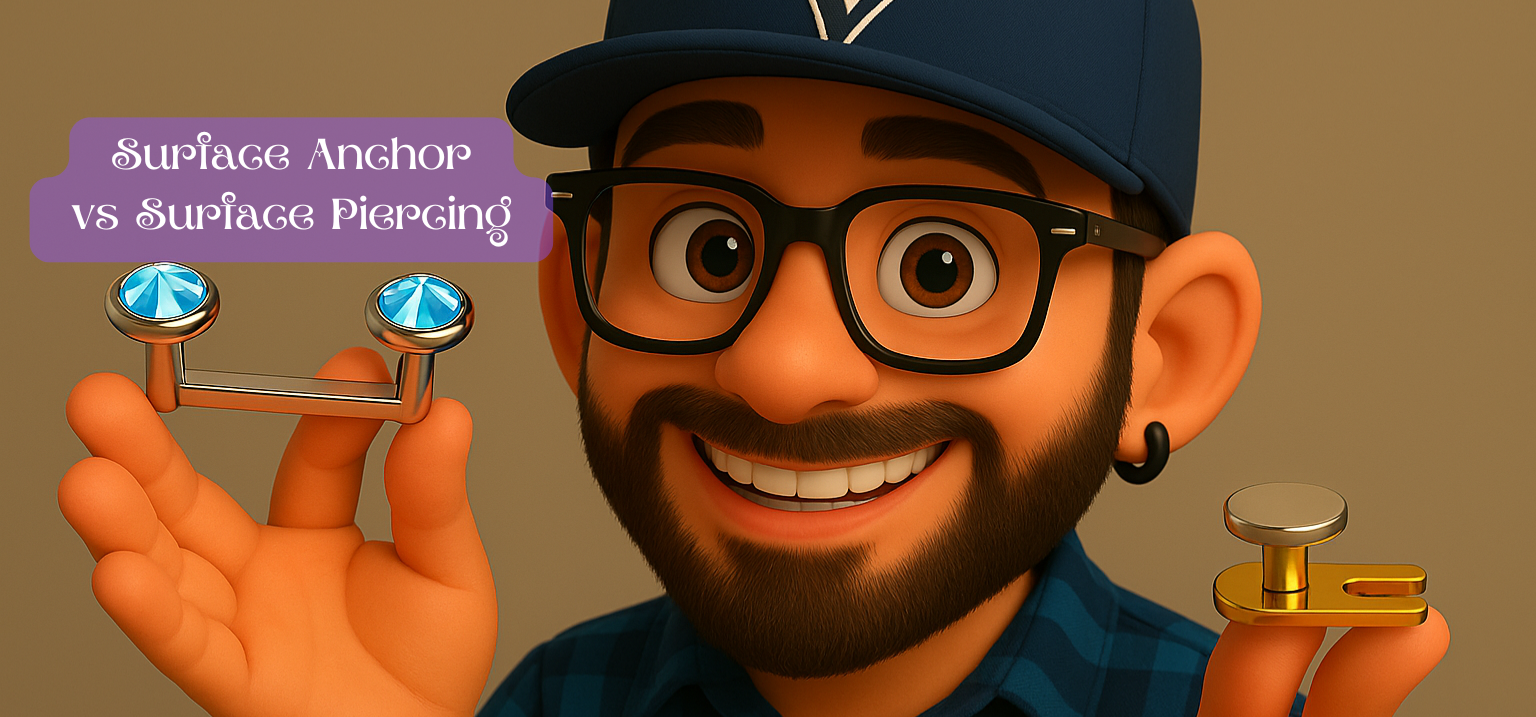
A dermal anchor base (usually made of titanium or implant-grade steel) is inserted under a small pocket of skin. A threaded or threadless decorative top is then screwed or pushed into the anchor, and that’s the visible jewelry you see.
Common areas: Cheekbone, collarbones, sternum, nape of neck, hips, etc.
Healing time: 3 to 6 months, depending on placement and aftercare.
Pros:
- Sleek and minimal design
- Can be placed in areas not suitable for traditional piercings
- No “exit” point, so only one piece of jewelry shows
Cons:
- Requires surgical-style removal if you want it out
- Prone to rejection or migration in high-movement areas
- Not ideal for everyone’s anatomy
➿ What Is a Surface Piercing?
A surface piercing goes in one side of the skin and out the other, but both entry and exit points lie flat against the body; unlike traditional piercings that go through a ridge or protrusion (like a lip or earlobe). The jewelry used is specifically shaped to accommodate the flatness of the area.
How it works:
A barbell with two 90-degree angles (often called a surface bar) is inserted just beneath the skin. The entry and exit points are aligned horizontally or vertically, depending on the area.
Common areas: Nape of neck, hips, chest, eyebrow (horizontal), sternum.
Healing time: 6 months or longer, with possible extended care
Pros:
- Customizable placement for symmetrical or paired designs
- Jewelry is removable and changeable more easily than dermals
- Better long-term viability with the right anatomy and jewelry
Cons:
- Still prone to migration/rejection if not placed correctly
- Needs very specific jewelry and professional technique
- Not always ideal in high-friction or high-motion areas
✨ So Which One Is Better?
It really depends on your anatomy, lifestyle, and aesthetic goals. I offer in-depth consultations to assess your anatomy and discuss the pros and cons of each option. We’ll never place a piercing that isn’t viable long-term, and we’ll always walk you through the healing process, aftercare, and realistic expectations.
My recommendation:
- Want a small, single gem or disc with minimal jewelry showing? A surface anchor might be best.
- Looking for paired piercings or something that you may want to change out later? A surface piercing could be the way to go.
🧼 Aftercare and Long-Term Success
Both surface anchors and surface piercings require diligent aftercare. That includes:
- Avoiding snagging on clothing, towels, and bedding
- Gentle saline soaks or sterile saline sprays
- Watching for signs of migration, rejection, or buildup
I carry high-quality aftercare products and will guide you every step of the way during healing.
📍 Ready to Book?
Whether you’re still deciding or ready to get pierced, I’m here to help. With over 20+ years of experience and advanced training through Fakir Intensives and the APP, you’re in trusted hands.
📍 Based in Staten Island, NY
📟 Text to schedule: 347-770-7653
🗓️ Book online anytime: book.ipricku.com
📸 Follow for studio updates, jewelry arrivals, and client stories: links.ipricku.com