What Is a Piercing Bump and How Does It Differ From a Keloid? | Expert Piercing Healing Guide
On this page
- What Is a Piercing Bump?
- What Is a Keloid?
- Key Differences Between Piercing Bumps and Keloids
- How to Tell If You Have a Piercing Bump or a Keloid
- Best Practices for Managing a Piercing Bump
- What To Do If You Suspect a Keloid
- FAQs About Piercing Bumps and Keloids
- Conclusion: Knowledge Is Power When Healing
- Not sure what kind of bump you’re dealing with? Let’s take a look together.
If you’ve found a bump around your piercing and you’re feeling a little freaked out, you’re not alone.
After more than 27 years in professional piercing, I can tell you that bumps are one of the most common healing questions I get. The important thing to know is that not every bump is a problem, and not every bump is a keloid. I’m here to help you understand the difference and figure out your next steps with confidence.
What Is a Piercing Bump?
A piercing bump is a small, localized area of swelling that forms near a healing piercing.
These bumps usually happen because of minor irritation Things like friction from sleeping on the piercing, using jewelry that’s too tight or rough, or even just normal healing stress.
Typically, piercing bumps:
- Stay close to the piercing hole
- Are soft or slightly firm
- Can be pink, skin-toned, or slightly red
- Often respond well to gentle care like saline soaks
They’re a sign that your body is reacting to a little trauma, not that something is seriously wrong.
What Is a Keloid?
A keloid is something very different and much more rare.
Keloids are a type of aggressive scar tissue that keeps growing beyond the boundaries of the original wound. Instead of healing and stopping, the body keeps producing collagen, forming a thick, raised, sometimes itchy or painful mass.
Here’s what we know:
- About 10-15% of people with darker skin tones are genetically predisposed to keloid formation (American Academy of Dermatology).
- Keloids can appear months after the initial trauma.
- They are firm, rubbery, and extend beyond the jewelry site.
Important:
If you suspect a keloid, it’s best to talk to a dermatologist. Piercing bumps can often be managed at home, but keloids typically need professional treatment.
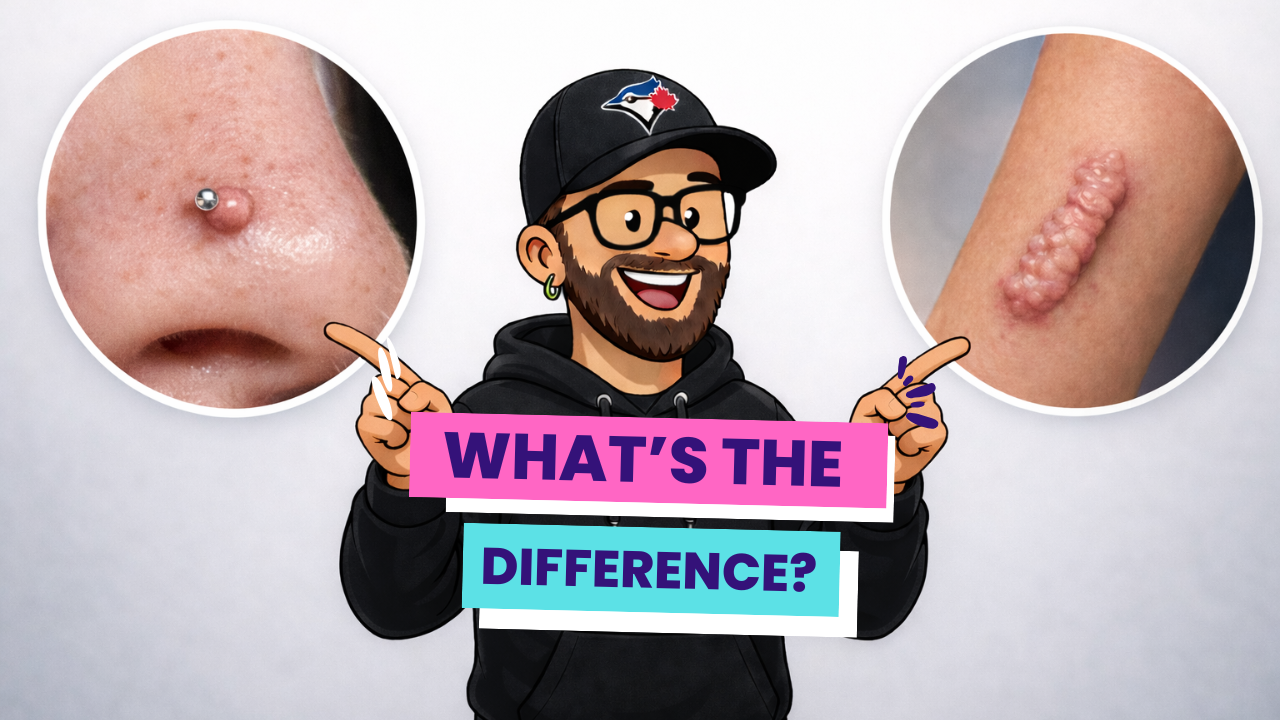
Key Differences Between Piercing Bumps and Keloids
| Feature | Piercing Bump | Keloid |
|---|---|---|
| Size | Small, localized | Expands beyond piercing |
| Texture | Soft or slightly firm | Hard, dense |
| Color | Pink, skin-toned, red | Darker, red-purple |
| Healing | Resolves with aftercare | Needs medical treatment |
| Timeline | Early during healing | Appears months later |
Knowing these differences can help you avoid unnecessary stress and get the right help if you need it.
How to Tell If You Have a Piercing Bump or a Keloid
When you’re looking at your piercing, ask yourself:
- Is the bump sticking to the jewelry area only?
- Is it soft and getting smaller with saline soaks?
- Is it getting larger and spreading into surrounding skin?
If the bump is small, soft, and close to the piercing, it’s probably a normal healing bump.
If it’s growing or feeling dense and rubbery, it’s time to consult a professional.
Best Practices for Managing a Piercing Bump
If you’re dealing with a piercing bump, here’s what I usually recommend:
- Saline soaks: Stick to sterile saline only. No alcohol, peroxide, or harsh cleaners.
- Use implant-grade jewelry: Titanium, niobium, and solid gold are your best friends.
- Downsize when appropriate: Big posts or long bars can cause movement and trauma.
- Be gentle: Avoid sleeping on the piercing or catching it with your hair or clothing.
Consistency is key. Healing takes time, but bumps can often shrink dramatically within a few weeks if you stay on track.
What To Do If You Suspect a Keloid
If you’re worried that you might have a keloid:
- Consult a dermatologist or trusted doctor right away.
- Treatment options could include:
- Cortisone injections to shrink the keloid
- Laser therapy
- Surgical removal (only for very persistent cases, and even then, keloids can grow back)
Keloids are not something you can treat effectively with at-home remedies, so getting medical advice early makes a huge difference.
FAQs About Piercing Bumps and Keloids
No, piercing bumps don’t turn into keloids. Keloids are a different type of tissue response altogether.
Usually not dangerous, but ignoring irritation can prolong healing or cause scarring.
It depends. If you’ve had true keloids before, you should talk to a dermatologist before getting another piercing.
Conclusion: Knowledge Is Power When Healing
Piercing bumps can be annoying, but they’re a normal part of the healing process for many people and very different from true keloids.
If you stay calm, use good aftercare, and make smart jewelry choices, you can often clear up bumps without any major issues.
And if you’re ever unsure, there’s no shame in asking for help!
Not sure what kind of bump you’re dealing with? Let’s take a look together.
💛 Text 347-770-7653 to set up an appointment, or
🗓️ Book a piercing checkup appointment online anytime: book.ipricku.com