What’s Anodized Jewelry? Is It Safe for Piercings?
On this page
Anodized jewelry is one of the most popular options for colorful titanium body jewelry, and I get asked all the time whether it’s safe for fresh or healed piercings. If you’ve ever seen a piece of jewelry in electric blue, golden yellow, or vivid purple and wondered how it got that way, you’re not alone. The answer is anodizing, and yes; anodized titanium is safe for piercings when it’s done right.
Let’s talk about what anodizing is, how it works, and why quality still matters.
🔧 What Is Anodizing?
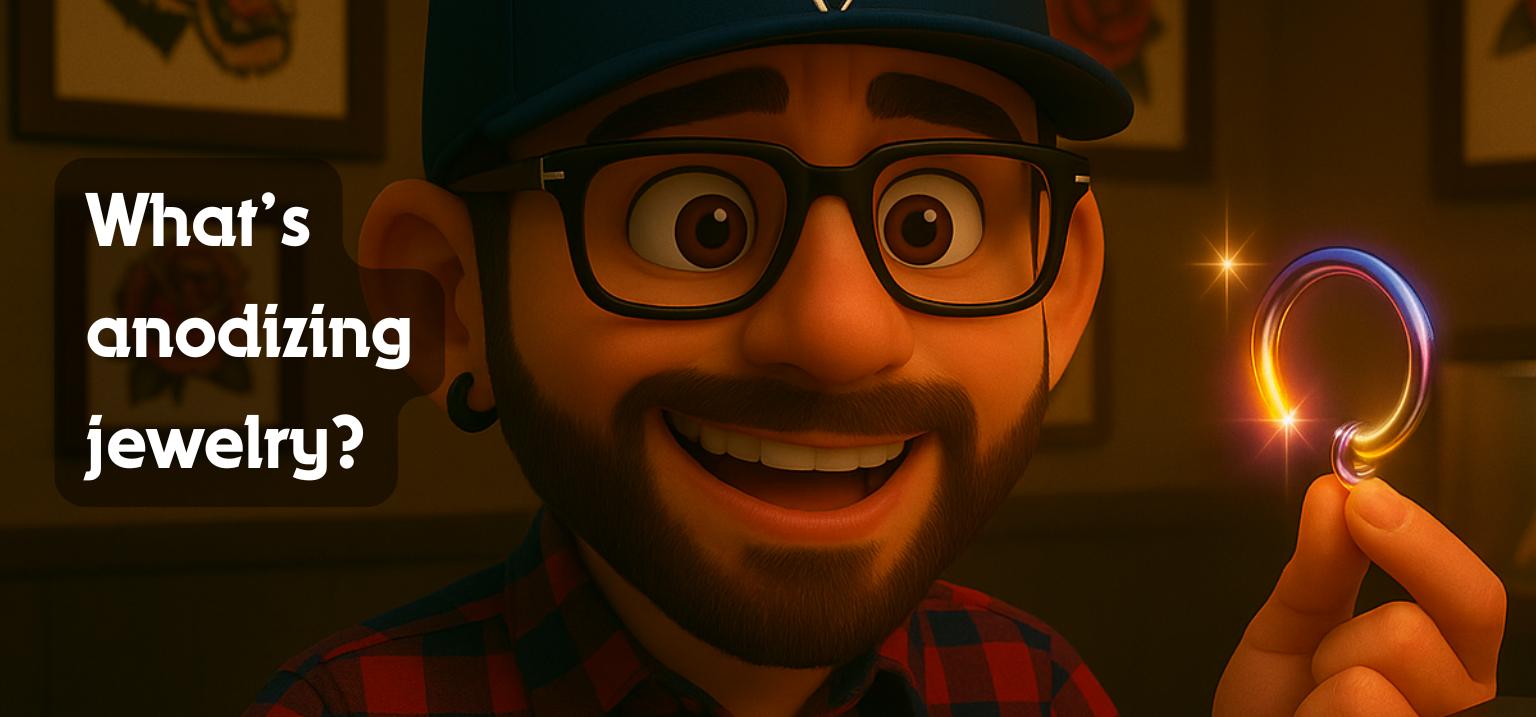
Anodizing is a surface treatment process that changes the color of titanium jewelry without using dyes or coatings.
Instead, it uses an electrical current to create a thin oxide layer on the surface of the metal. This layer changes the way light reflects off the jewelry, producing different colors based on the voltage used.
That means:
- No paint
- No chipping
- No fading (unless exposed to strong chemicals)
🌈 Is Anodized Jewelry Safe for Piercings?
Yes. Anodized implant-grade titanium is absolutely safe for healed and fresh piercings as long as it meets quality standards.
If you have sensitive skin, anodized titanium is often a great option. I also break down what jewelry is best for sensitive skin in another post
I only carry jewelry made from ASTM F-136 implant-grade titanium. This includes pieces from companies like:
- Anatometal
- Industrial Strength
- Neometal
- Clickerino
- Jimmy Buddha Designs
These brands use verified titanium stock and safe anodizing methods, ensuring no contamination or irritation.
🛑 What’s Not Safe?
There are a few big red flags to watch for when it comes to anodized jewelry:
- Mystery metal (not labeled as implant-grade titanium)
- “Anodized” surgical steel
- Colorful jewelry from big box stores or sketchy websites
- Jewelry with flaking color (this means it’s been painted or coated. Not anodized)
Bottom line: If the price seems too good to be true, it probably is.
💡 Why Choose Anodized Jewelry?
Aside from safety, anodized titanium has some great benefits:
- Custom colors: Coordinate with your wardrobe or curated ear project
- Nickel-free: Unlike many other metals, titanium is hypoallergenic
- Lightweight and strong: Comfortable for daily wear, even in large gauges
- Polish-friendly: Anodized surfaces are smooth, minimizing bacteria buildup
Anodized jewelry is especially popular for curated ears because it allows color customization without sacrificing safety.
👂 Can I Use Anodized Jewelry in New Piercings?
Yes. But only if it’s:
- Implant-grade titanium
- From a reputable brand
- Free of scratches, damage, or imperfections
That’s why all jewelry I carry is carefully selected, sterilized, and prepped before going into a new piercing.
If you’re unsure, come in for a consult or book an appointment at book.ipricku.com. I’ll help you find the perfect piece.
TL;DR
- Anodizing changes the color of titanium using electricity, not paint
- Implant-grade anodized titanium is safe for piercings (including new ones!)
- Only trust verified manufacturers for anodized jewelry
- Never use anodized steel or mystery metals in a piercing
- I carry a full selection of safe, colorful jewelry
Want a pop of color in your curation without compromising safety? Anodized titanium lets you express yourself boldly and beautifully. With total confidence.
📍 Located in Staten Island, NY
📟 Text to schedule: 347-770-7653
🗓️ Book online anytime: book.ipricku.com
📸 See my latest work, jewelry arrivals, and client stories: links.ipricku.com