The Differences Between a Navel Piercing and a Floating Navel Piercing
On this page
Belly button piercings have remained one of the most popular body piercings for decades. But what many people don’t realize is that there isn’t just one type of navel piercing. Depending on your anatomy, you may be a better candidate for either a traditional or a floating navel piercing. Here’s everything you need to know to choose the right option for your body, and avoid complications down the line.
What Is a Traditional Navel Piercing?
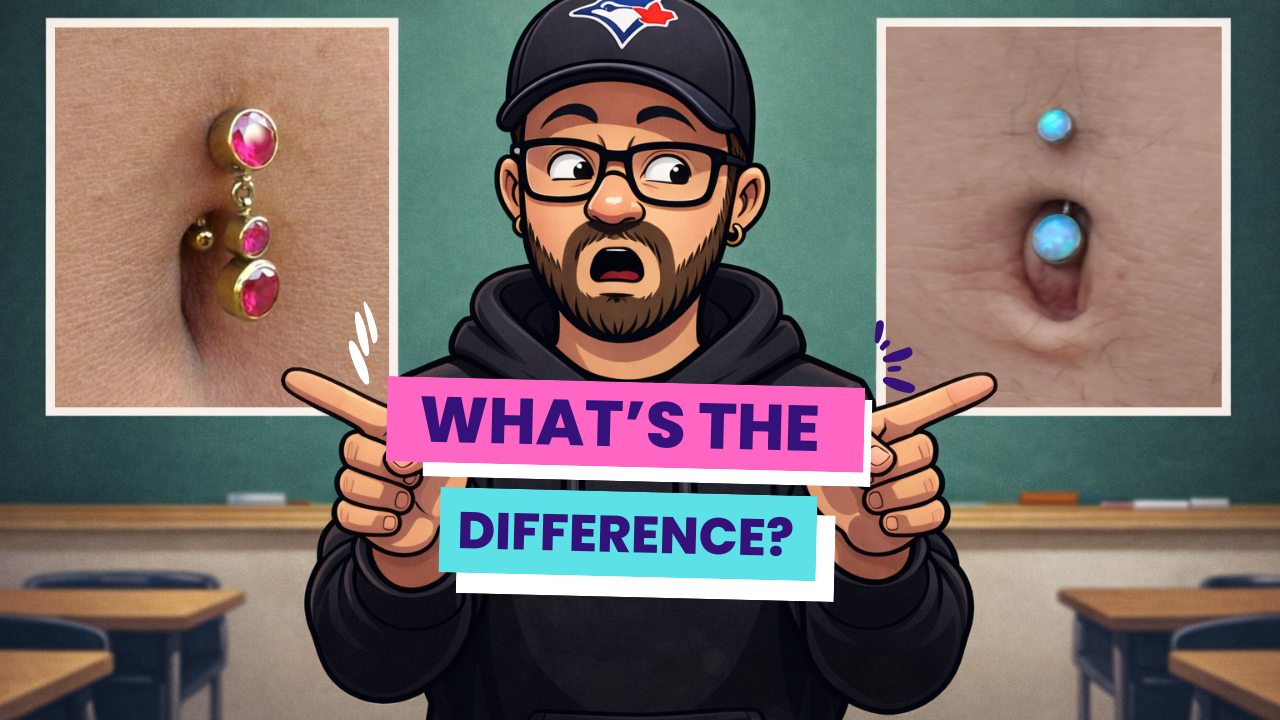
A traditional navel piercing goes through the upper rim of the navel and exits just above or inside the navel cavity. You’ll typically see a curved barbell, with both the top and bottom gems or balls visible. This is the style most people picture when they think of a belly button ring.
Ideal candidates: People with a clearly defined overhang or “lip” above their navel.
Jewelry: Internally threaded or threadless curved barbells made from implant-grade titanium or 14k+ gold.
Healing time: Around 6-12 months, depending on anatomy, lifestyle, and jewelry quality.
What Is a Floating Navel Piercing?
A floating navel piercing also enters through the upper ridge of the navel but exits behind the navel fold, making the bottom of the jewelry invisible. Only the top is visible, and the jewelry sits flush against the skin.
Ideal candidates: People with a shallow navel, tight skin, or a flatter belly button without much of an overhang.
Jewelry: A curved barbell with a flat or low-profile disc on the bottom, designed to sit under the skin and reduce irritation.
Healing time: Similar to traditional navels (6-12 months), but may require a bit more attention during healing due to tighter skin and subtle movement.
Key Differences Between the Two Styles
| Feature | Traditional Navel | Floating Navel |
|---|---|---|
| Jewelry Visibility | Top & bottom ends | Only the top end |
| Anatomy Requirements | Pronounced ridge | Shallow or tight navels |
| Jewelry Fit | Standard curved barbell | Low-profile curve |
| Healing Complexity | Moderate | Slightly more delicate |
| Aesthetic | Classic | Sleek & minimalist |
How to Know Which Is Right for You
Not everyone is suited for a traditional navel piercing, and that’s okay. The best way to find out what will work for you is to book a consultation with a professional piercer who has experience with both styles. During an anatomy check, I can assess the placement, skin tension, and overall viability to recommend the best option.
It’s especially important to avoid getting a traditional navel piercing if your anatomy doesn’t support it. This can lead to migration, rejection, and scarring.
Jewelry Quality Matters
Regardless of which type you get, always make sure your jewelry is:
- Implant-grade titanium (ASTM-F136) or solid gold (14k or higher)
- Internally threaded or threadless (not externally threaded)
- Sized specifically for your body
Using the wrong jewelry can irritate the tissue, delay healing, and raise your risk of infection.
Floating Navels Are Rising in Popularity
Floating navel piercings are a sleek, subtle, and stylish option for folks who want something more minimalist or who don’t love the look of a hanging gem inside the navel. This style also works better for clients with tighter midsections or flatter navels that wouldn’t support a traditional style safely.
Why Professional Experience Matters
I’ve performed hundreds of both traditional and floating navel piercings, and I always take time to assess each client’s unique anatomy. A thorough consultation allows me to provide the safest, most aesthetic placement possible. Because a piercing should fit your body, not a one-size-fits-all template.
Choosing the wrong style or piercer could result in:
- Migration or rejection
- Poor jewelry fit
- Unnecessary scarring
Final Thoughts
Both traditional and floating navel piercings can be beautiful additions to your look. But only when done thoughtfully. It all comes down to anatomy, jewelry, and experienced hands.
📍 Located in Staten Island, NY
📟 Text with questions or to schedule: 347-770-7653
🗓️ Book online anytime: book.ipricku.com
🔗 Follow for studio updates and real client photos: links.ipricku.com
Got a piercing question? Drop it in the comments or send me a message. It might become the next blog post!