Basic Piercing Jewelry: What It Means and What You Can Expect
On this page
- Why Titanium Is So Commonly Used for Basic Piercing Jewelry
- The 5 Basic Jewelry Styles I Commonly Use
- Threadless vs. Internally Threaded Jewelry: What’s the Difference?
- Basic Doesn’t Have to Mean Boring: Anodized Titanium
- How Do I Know Which Basic Jewelry Is Right for My Piercing?
- Basic Jewelry Is Where Your Piercing Starts, Not Where It Has to Stay
- Why I Start With the Jewelry the Piercing Actually Needs
- Frequently Asked Questions About Basic Piercing Jewelry
- Ready to Get Pierced?
If you’re getting pierced for the first time, you may be wondering what basic piercing jewelry actually means. At a professional piercing studio, “basic” does not mean cheap or low quality. It means a simple, reliable piece of body jewelry that is appropriate for a fresh piercing and suited to the placement.
For most initial piercings, I use implant-grade titanium jewelry because it is lightweight, corrosion resistant, biocompatible, and available in a wide range of styles and sizes. Depending on the piercing, I may use a labret post, straight barbell, curved barbell, circular barbell, or captive bead ring. The right jewelry depends on the placement, your anatomy, and the requirements of the piercing.
In this guide, I’ll explain what basic piercing jewelry is, why certain materials and jewelry styles are commonly used for initial piercings, and which pieces are appropriate for different placements. I’ll also explain how you can customize basic jewelry with anodized titanium or upgrade to more elaborate jewelry after your piercing has healed.
I’m a professional body piercer with more than 26 years of experience. I’m an Association of Professional Piercers (APP) Member and Educator and a Fakir Intensives alumnus, and I specialize in private, appointment-only piercing using jewelry from established manufacturers and designers including Anatometal, Industrial Strength, BVLA, Pupil Hall, and others. My goal is to give you the information you need to make informed decisions about your piercing from the initial jewelry selection through long-term wear.
Why Titanium Is So Commonly Used for Basic Piercing Jewelry
A large portion of the basic piercing jewelry I use is made from implant-grade titanium, including titanium that meets the ASTM F136 specification.
Titanium is widely used for initial piercings because it combines several useful properties:
- It is lightweight.
- It is highly corrosion resistant.
- It is biocompatible when the appropriate implant-grade material is used.
- It can be anodized to create a range of colors without applying a coating or paint.
- It is available in many of the jewelry styles and configurations needed for body piercing.
You may also hear people describe titanium as “hypoallergenic.” I prefer to be more specific. No material can guarantee that every person will tolerate it perfectly, but properly manufactured implant-grade titanium has a strong track record for use in body piercing and is one of the materials I commonly recommend for initial jewelry.
The Association of Professional Piercers provides information about appropriate jewelry materials and standards for initial piercings, which is one reason I place so much importance on knowing exactly what material I’m putting into a fresh piercing.
The 5 Basic Jewelry Styles I Commonly Use
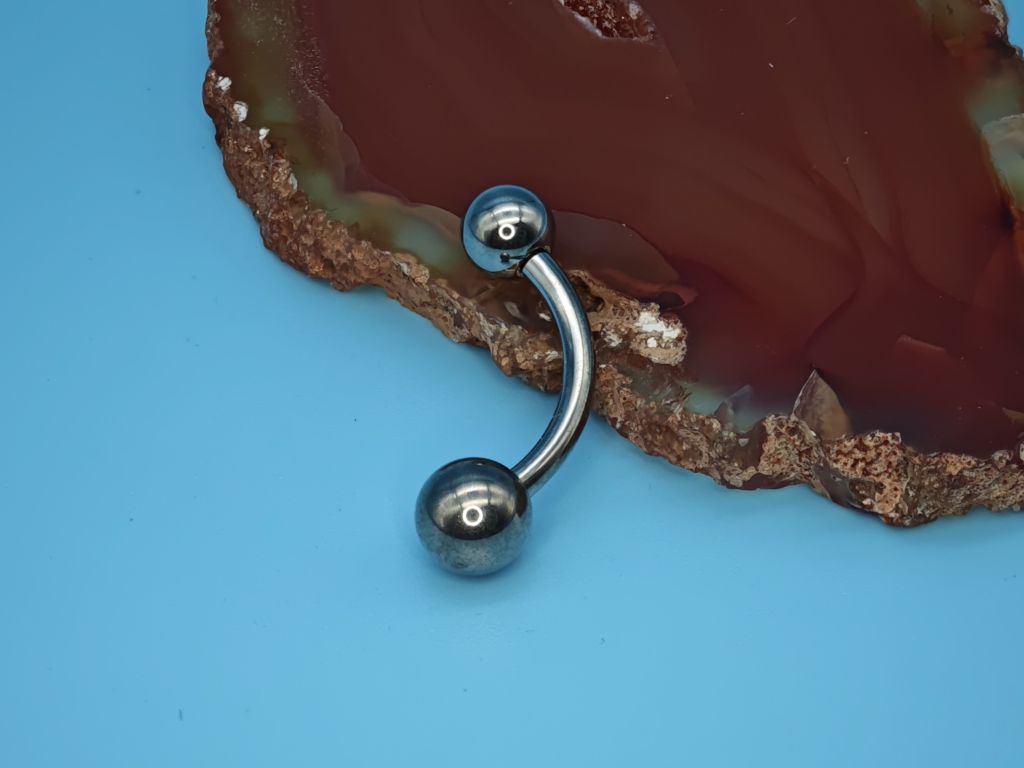
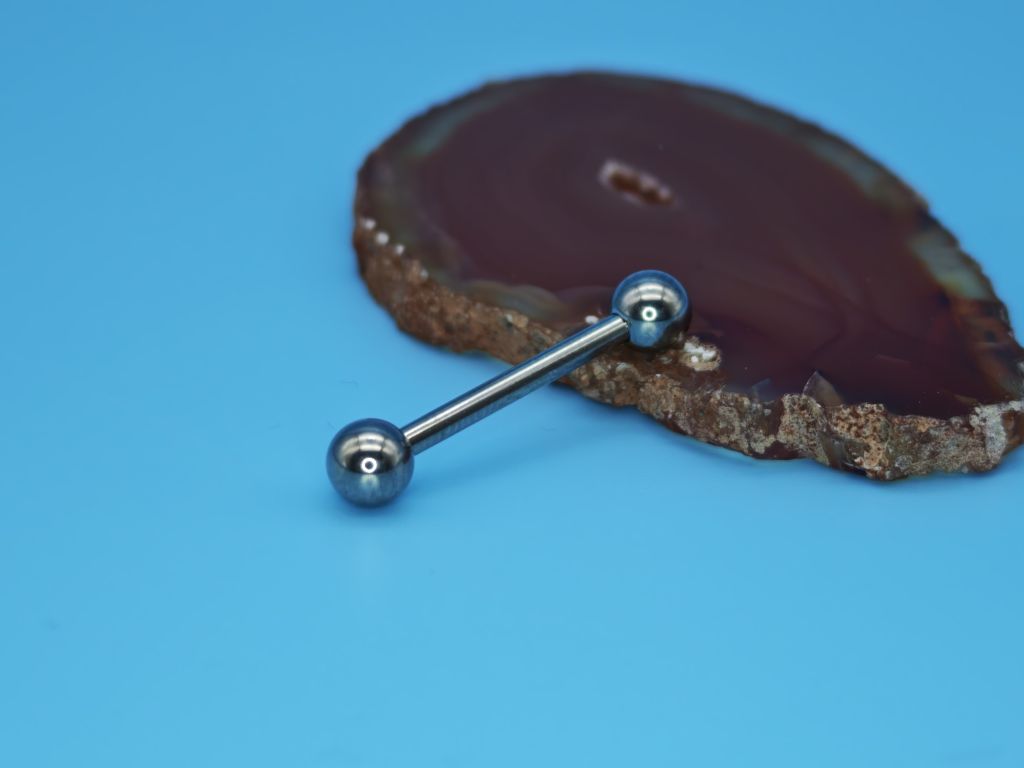
| Style | Price | Material | Common Placements |
|---|---|---|---|
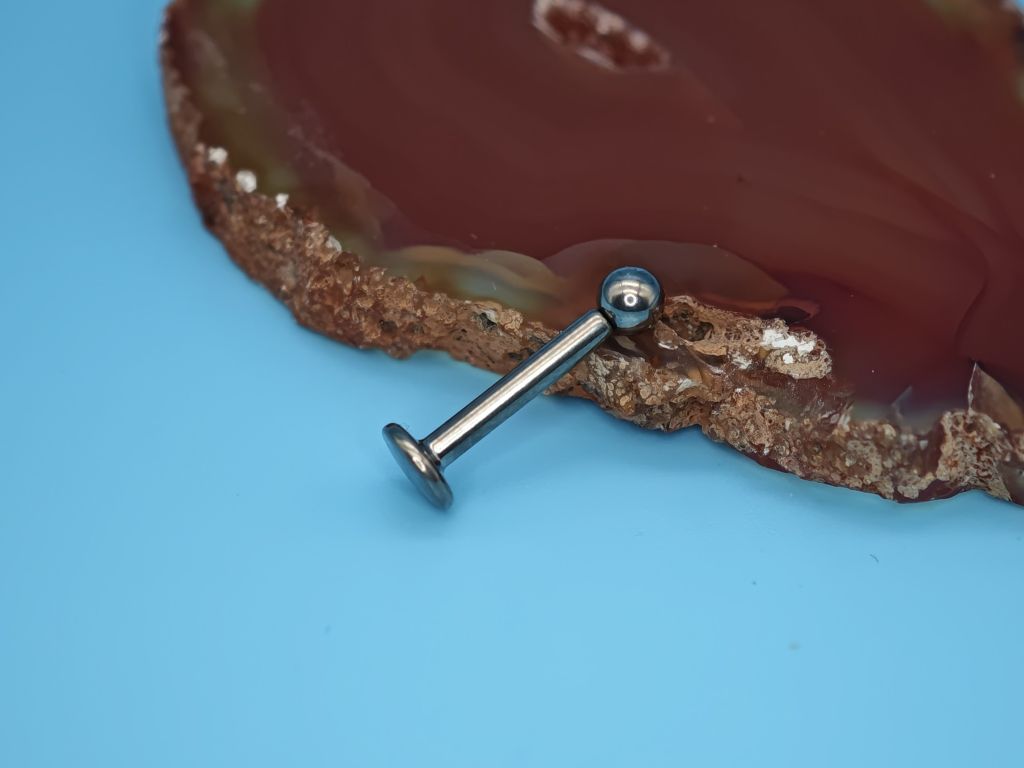
| Labret Post | $35 | Titanium | Lip, lobes, cartilage, nostril, and more |
| Straight Barbell | $35 | Titanium | Tongue, industrial, nipple |
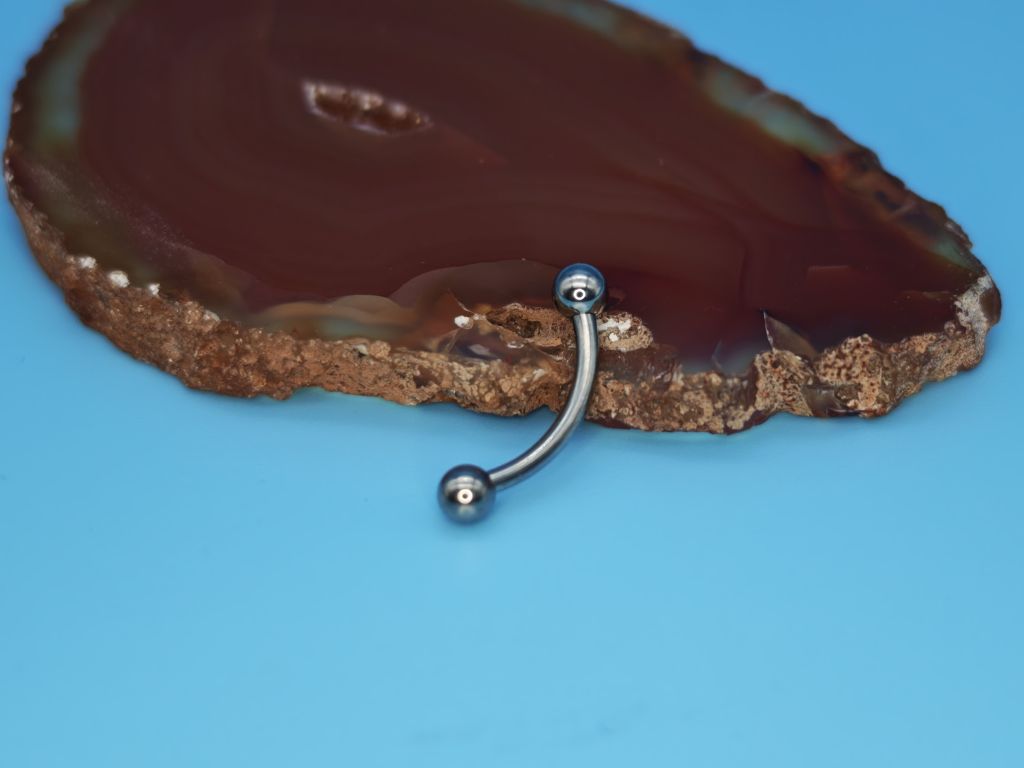
| Curved Barbell | $40 | Titanium | Rook, eyebrow, navel |
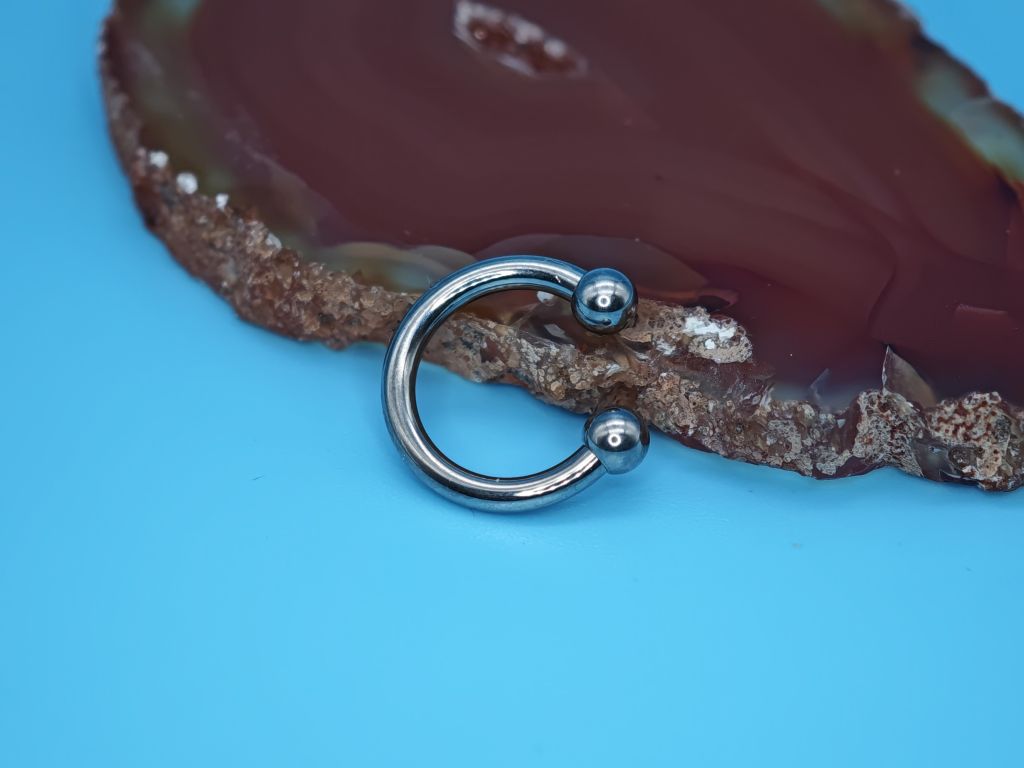
| Circular Barbell | $50 | Titanium | Septum |
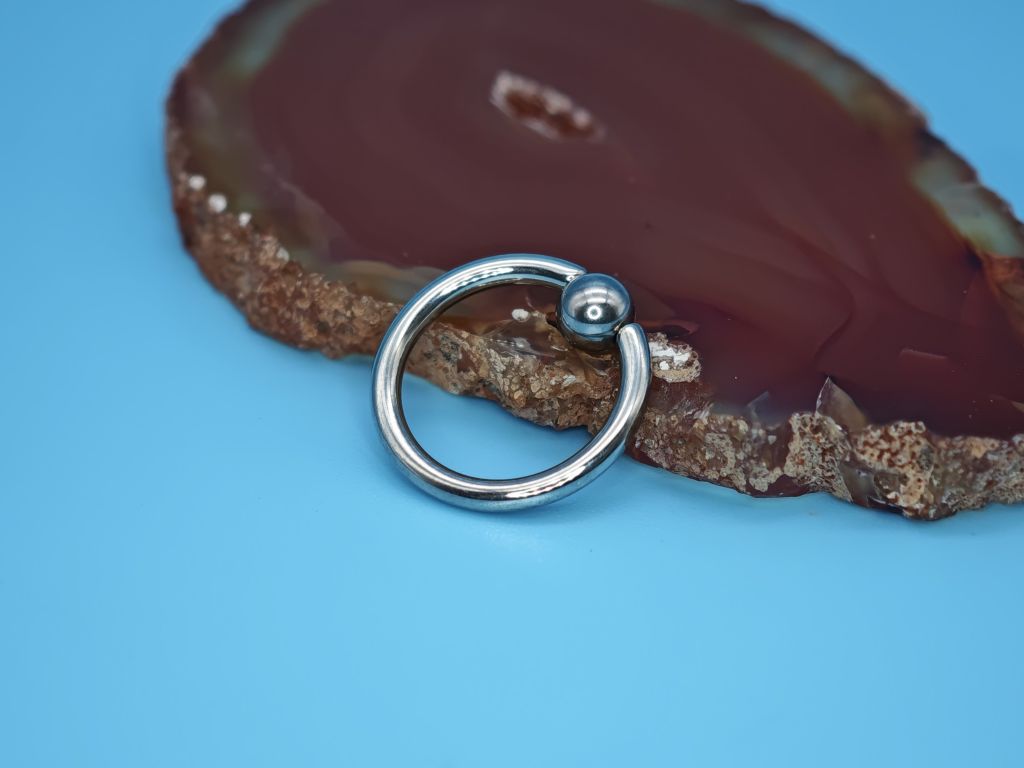
| Captive Bead Ring | $35 | Stainless/Niobium | Daith, septum |
These are some of the basic piercing jewelry configurations you are most likely to encounter during a piercing appointment. The appropriate piece is determined by the placement and your individual anatomy, so this isn’t a substitute for an in-person consultation.
Titanium Labret Post – $35
The labret post is one of the most versatile pieces of basic piercing jewelry I use.
It consists of a straight post with a flat disc on one end and a decorative end on the other. Depending on the piercing and anatomy, labret posts can be appropriate for many ear, lip, and nostril piercings.
The flat back also makes them particularly useful in locations where having a smooth surface against the body is beneficial.
If you’re coming in for a basic ear or facial piercing, there’s a good chance a labret post will be part of the conversation.
Titanium Straight Barbell – $35
A straight barbell has a straight post with a removable end on either side.
Depending on anatomy and placement, straight barbells are commonly used for piercings such as the tongue, nipple, and certain industrial piercings.
Industrial piercings are particularly anatomy-dependent, so the jewelry isn’t selected simply because the piercing is called an “industrial.” I’ll need to evaluate the anatomy and determine the appropriate jewelry dimensions before proceeding.
Titanium Curved Barbell – $40
A curved barbell follows a gentle curve rather than sitting completely straight.
Depending on anatomy and jewelry design, curved barbells can be used for piercings such as the rook, eyebrow, and navel.
Again, the name of the piercing doesn’t automatically determine the jewelry. The shape, dimensions, placement, and anatomy all need to work together.
Titanium Circular Barbell – $50
A circular barbell is shaped like a partial circle with two removable ends.
It is commonly used for piercings such as the septum when the anatomy and desired look are appropriate.
Circular barbells can also be used in other placements, but jewelry selection should always be based on the specific piercing rather than assuming one style works for everyone.
Stainless Steel or Niobium Captive Bead Ring – $35
Captive bead rings are another option I use for certain piercings, including daith and septum piercings.
Unlike a threaded or threadless piece, a captive bead ring uses the tension of the ring to hold a separate bead in place. The ring has to be manipulated during installation and removal, which is one reason the material and construction of the jewelry matter.
Niobium and appropriate implant-grade stainless steel can be useful choices for this type of jewelry because of their material properties and the jewelry designs available in those materials.
The fact that a particular piece isn’t titanium doesn’t automatically make it inferior. Jewelry material should be selected based on the requirements of the jewelry and the piercing, not simply because one material has become the most familiar name in the industry.
Threadless vs. Internally Threaded Jewelry: What’s the Difference?
Many of the posts and barbells I use can be configured with either threadless or threaded ends.
Threadless Jewelry
Threadless jewelry uses a small pin on the decorative end that fits into the post through tension.
There is no threaded connection to screw together. When properly manufactured and assembled, threadless jewelry is secure while also allowing for quick and straightforward jewelry changes by a professional piercer.
Internally Threaded Jewelry
Internally threaded jewelry uses a threaded connection between the post and the decorative end.
The end screws onto the post, creating a secure connection when properly manufactured and tightened.
Neither system is automatically “better” for every piercing. The right choice depends on the jewelry, the placement, your anatomy, and how the jewelry will be used.
I’ll help you determine which configuration makes the most sense during your appointment.
Want the full breakdown? Read my detailed guide: Threadless vs. Threaded Jewelry: What’s the Difference?
Already have threadless jewelry and need to change it yourself? See my step-by-step guide to inserting and removing threadless jewelry.
Basic Doesn’t Have to Mean Boring: Anodized Titanium
The word “basic” also doesn’t have to mean that your jewelry has to be plain silver-colored titanium.
Titanium can be anodized, which uses an electrochemical process to change the color of the metal’s surface. Unlike paint or a coating, anodizing doesn’t add a layer of colored material to the jewelry.
That means you can add color and personality to a basic titanium piece without necessarily moving into precious metals or gemstone jewelry.
If you like the idea of colorful jewelry but aren’t ready to invest in a solid gold or genuine gemstone piece, anodized titanium can be a great option.
It is still the same type of implant-grade titanium. The difference is the color.
And yes, anodized jewelry can be used for an initial piercing when the jewelry itself is appropriate for the placement and meets the necessary material and quality requirements.
How Do I Know Which Basic Jewelry Is Right for My Piercing?
This is where things get a little more complicated than simply matching a piercing to a jewelry style.
As a general starting point:
- Lobe, cartilage, and many nostril or lip piercings: often a labret post
- Tongue and nipple piercings: often a straight barbell
- Industrial piercings: typically a straight barbell, provided your anatomy is appropriate
- Rook, eyebrow, and some navel piercings: may use a curved barbell
- Septum piercings: may use a circular barbell or captive bead ring
- Daith piercings: may use a captive bead ring or another appropriate ring-style piece
Notice the words “often,” “may,” and “typically.”
There isn’t a universal jewelry chart that can replace looking at your anatomy.
Two people can have the same type of piercing and require completely different jewelry dimensions. Even the same jewelry style can require different lengths, diameters, gauges, or configurations from one person to another.
That’s why I select your jewelry during your consultation rather than having you choose a piece from a chart before I have seen the piercing site.
Basic Jewelry Is Where Your Piercing Starts, Not Where It Has to Stay
One of the biggest misconceptions about basic jewelry is that you’re somehow committing to that piece forever.
You’re not.
Once your piercing has healed sufficiently and the jewelry can safely be changed, you can move into more elaborate designs, precious metals, gemstones, and custom pieces.
This is where jewelry from companies such as Anatometal, Industrial Strength, BVLA, Pupil Hall, and other established manufacturers and designers can completely change the look of a piercing.
A simple titanium labret can eventually become a solid gold piece with a genuine gemstone.
The piercing doesn’t have to change. The jewelry does.
If you’re interested in building a more elaborate look over time, you can also explore my ear curation services.
Why I Start With the Jewelry the Piercing Actually Needs
When you come in for a piercing, my job isn’t simply to put jewelry through your body.
I need to consider:
- Your anatomy
- The placement
- The angle of the piercing
- Appropriate jewelry dimensions
- The material
- The jewelry’s design
- How much room is needed during healing
- How the jewelry will interact with the surrounding tissue
- Your lifestyle and individual needs
Sometimes the simplest piece is the best piece.
Sometimes your anatomy allows for something more decorative.
The important part is making that decision after I have evaluated the piercing site, rather than deciding on the jewelry first and trying to make the anatomy fit the jewelry.
Frequently Asked Questions About Basic Piercing Jewelry
What does “basic jewelry” mean at a piercing studio?
Basic jewelry generally refers to a simple jewelry option intended to meet the needs of a fresh piercing without unnecessary decorative elements. It should still be made from an appropriate body-compatible material and manufactured to a suitable standard.
Basic does not have to mean cheap or low quality.
Is titanium jewelry hypoallergenic?
Implant-grade titanium is widely used for initial body jewelry because it is biocompatible and has a very low rate of sensitivity compared with many other metals.
However, “hypoallergenic” doesn’t mean that a reaction is impossible. Jewelry quality, surface finish, manufacturing, and individual circumstances all matter.
Why don’t you use titanium for every piece of jewelry?
Titanium is an excellent material, but the material needs to make sense for the jewelry being used.
Different jewelry designs have different mechanical requirements, and materials such as niobium and implant-grade stainless steel can be appropriate in specific applications.
I don’t choose a material simply because it is trendy. I choose it based on what the jewelry needs to do.
Can I get anodized titanium for my initial piercing?
Yes. When appropriate for the piercing, anodized implant-grade titanium can be used as initial jewelry.
It is a great option if you want some color without moving into gold or gemstone jewelry.
How much does basic piercing jewelry cost?
My basic jewelry currently ranges from $35 to $50, depending on the jewelry style.
More elaborate jewelry, solid gold, and genuine gemstones are priced separately and can vary considerably depending on the design, material, and stones selected.
Can I upgrade my jewelry later?
Absolutely.
Once your piercing is ready for a jewelry change, you can move from a basic piece into more decorative jewelry, including solid gold and genuine gemstones.
In fact, many of my clients start with basic jewelry and gradually build a more personalized collection over time.
Ready to Get Pierced?
Every piercing I perform starts with choosing jewelry that is appropriate for the placement, your anatomy, and the needs of a healing piercing.
If you’re not sure what jewelry you need, that’s okay. That’s part of my job.
You don’t need to show up knowing the difference between a labret, curved barbell, circular barbell, threadless end, or internally threaded end. I’ll explain your options, evaluate your anatomy, and help you choose jewelry that makes sense for your piercing.
Book your appointment: book.ipricku.com
Want something more colorful or decorative? Ask me about anodized titanium, solid gold, and genuine gemstone options during your consultation.
You can also explore my online jewelry shop to see some of the jewelry options I offer.